

Your Flaking Problem Has The Easiest Solution
A itchy flaky scalp is one of the most annoying yet common problems to have...so why does no one actually talk about the fix?

If your scalp itches all the time, flakes constantly, or feels like it has a layer of buildup that will not go away, this is for you.
I have worked with a lot of people dealing with this. Mild flakes. Heavy flakes that has been going on for years. And most of them got it under control faster than they expected once they changed two things in their routine.
So let me get to it.
First, an observation I’ve had
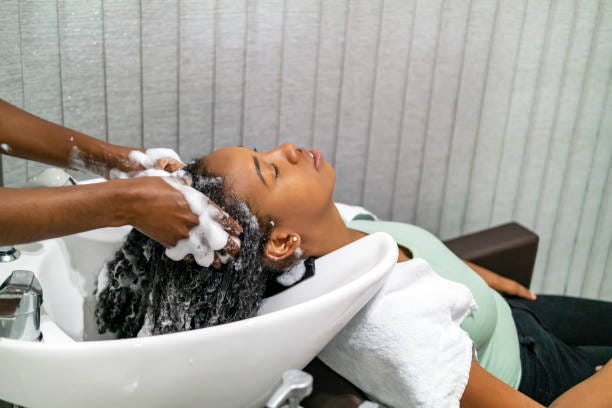
A lot of people have already been to the dermatologist. They got a medicated shampoo. They followed the instructions to a T. And they are still flaking heavily.
That happens more than people realize. A lot of people come to me saying they have spent thousands at the dermatologist just to deal with the same issue after getting treated.
I am not going to tell you what to make of that. I am just going to tell you what has actually worked for the people I have helped.
Why your scalp is flaking in the first place
Before the fix, you need to know what is actually happening.
Most mild to moderate flaking and itching is caused by a yeast on your scalp called Malassezia. Everyone has it. The problem is when it grows too much.
The thing that makes it worse is…oils. Specifically, almost every oil people are told to put on their scalp.
Coconut oil. Castor oil. Jojoba oil. Shea butter. Olive oil. Argan oil. Grapeseed oil.
All of them feed the yeast. So if you have been oiling your scalp trying to fix the flakes, you have most likely been making it worse without knowing it.
These oils are perfectly safe for the hair strand…just not the delicate skin on your scalp.
That is a huge piece of why medicated shampoos sometimes only get you so far. The shampoo is doing one job, but the rest of your routine is still feeding the problem.
P.S. If you’re serious about growing your hair based on your porosity, check out my 180-Day Porosity Hair Growth Roadmap by becoming a paid subscriber.
It walks you through exactly how to grow, moisturize, and retain length based on your porosity. Just sign up, check your email, and fill out the form. Your first guide will be sent to your inbox within 10 minutes.
The two-step fix
Here is what I actually recommend.
1. A salicylic or glycolic acid pre-shampoo treatment
Once a week, before you shampoo, apply a salicylic acid or glycolic acid scalp solution. Let it sit for 5-10 minutes. Then wash.
This chemically exfoliates the scalp. It lifts the sebum, the buildup, and the flakes that are stuck on there. By the time you shampoo, your scalp is actually clean and ready to absorb whatever comes next.
This step alone is what most people are missing. You cannot treat a scalp that is still covered in a bunch of old buildup.
(Only do this is you have no other scalp concerns like psoriasis or open sores)
2. The DermaZen MCT Scalp Oil
This is the one scalp oil I recommend to people with itching, flaking, or seborrheic dermatitis. And I do not get anything for saying that. I just have seen it work too many times to leave it out.
Here is why it works when other oils make things worse.
The base is MCT oil. MCT oil is one of the only oils that does not feed Malassezia. Squalane is also safe but does not get talked about much.
It is formulated with rosemary, tea tree, and peppermint, which all have antifungal properties. And it is dosed correctly so the essential oils are strong enough to do the job without burning your scalp.
This is also why I do not recommend making your own version at home. Essential oils are powerful. If you get the ratio wrong, you can end up inflaming your scalp or making the irritation worse.
What this looks like in your routine
Once a week: salicylic or glycolic acid pre-shampoo treatment. Shampoo after.
Between washes: DermaZen MCT Scalp Oil applied to the scalp as directed.
That is the routine. Just those two things.
Clients I have worked with who had thick buildup, constant itching, and years of frustration saw their scalp clear up almost completely within a few wash days of doing this.
Some still get occasional flakes. None of them are dealing with the same severity of what they were dealing with before.
When this is not enough
If you have done all of this and your scalp is still getting , the cause might not be topical.
Sometimes flaking is driven by food sensitivities, allergies, hormone issues, or internal inflammation. If you have ruled out your routine and you are still struggling, it is worth looking deeper.
But for most people with mild to moderate flaking, this is the routine.
Not sure if this is your issue?
This is exactly the kind of thing I figure out for people inside the Beginner Hair Analysis.
I look at your full hair profile, your scalp situation, your current routine, your styling habits, and the things that might actually be working against you. Then I tell you what to change and what to use based on what your hair and scalp actually need. (I do not give out medical advice)
If you have been dealing with itching and flaking for a while and you are tired of trying to figure it out alone, this is the place to start.